
The Spotlight Method
Landscape and macro photographers dread sunny days for forest photography, especially mid-day sun. The lighting conditions are incredibly harsh, making for unflattering compositions and challenging exposures.
Recently, I have decided to embrace this otherwise undesirable lighting scenario. I call it "the Spotlight Method." I look for subjects that are distinctly lit, with dark shadows in the background. I find a composition that emphasizes the lit subject, then intentionally underexpose the photo to make the shadows darker and to emphasize the brightly-lit subject without over-exposing it.
The exposure approach is very simple. I typically shoot in aperture priority ("A" for all camera manufacturers, except Canon - they call it "AV"). Why? Most often, my most important creative decision is depth of field. I can easily control shutter speed through adjustments of ISO. What aperture I shoot at for the Spotlight Method depends on lens, subject, and distance to subject. Most often, it is in the wider apertures. Then I adjust my exposure compensation to typically -2.0 to ensure that the shadows are good and black. I may occasionally adjust that, but most often that is where my exposure compensation rests.
Now, when I go on hikes in the woods on sunny days, I spend extra time looking for this particular photo opportunity. It often adds a new dimension to the experience.
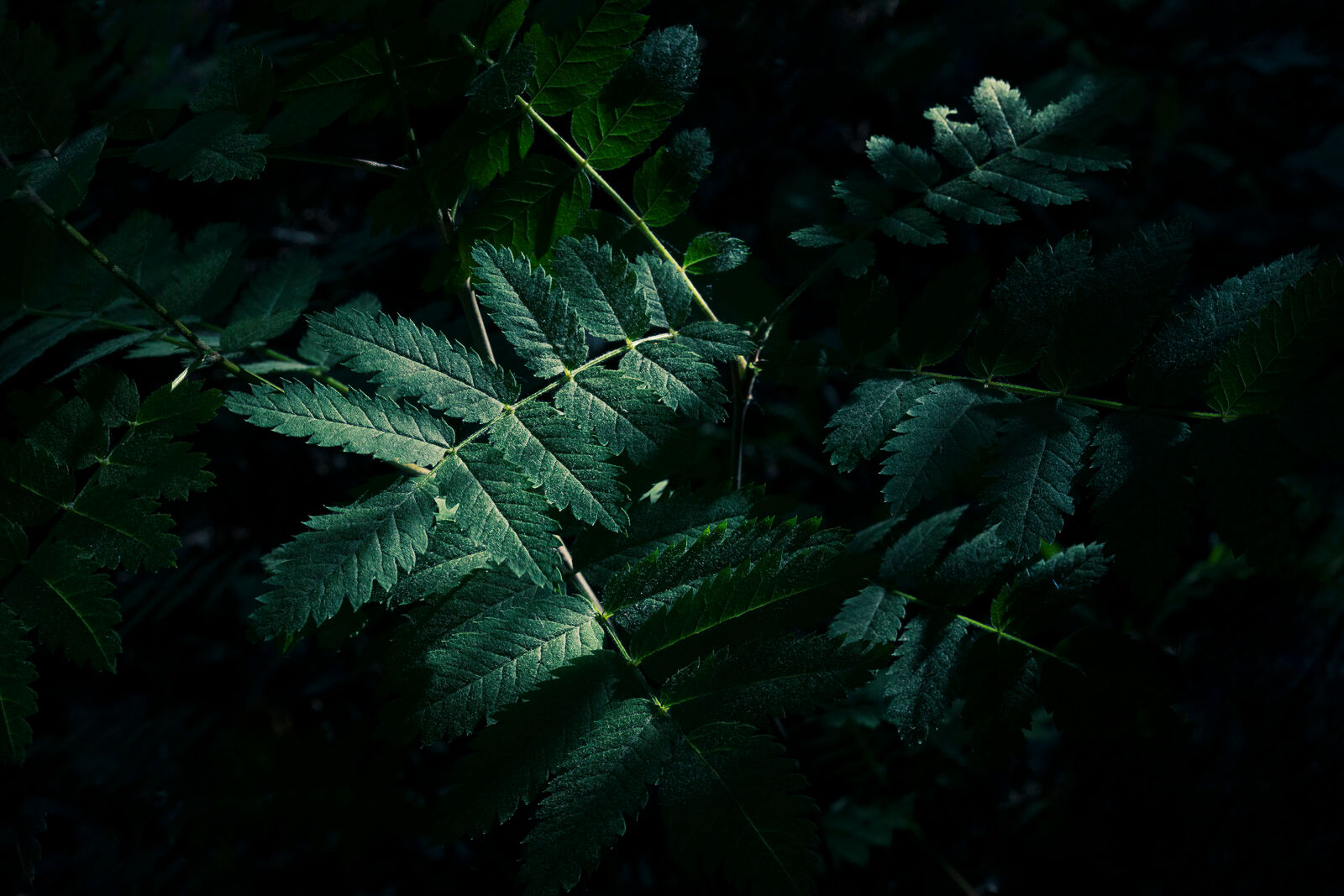
A small beam of sunlight washes over the feather leaves of a plant in the woods.
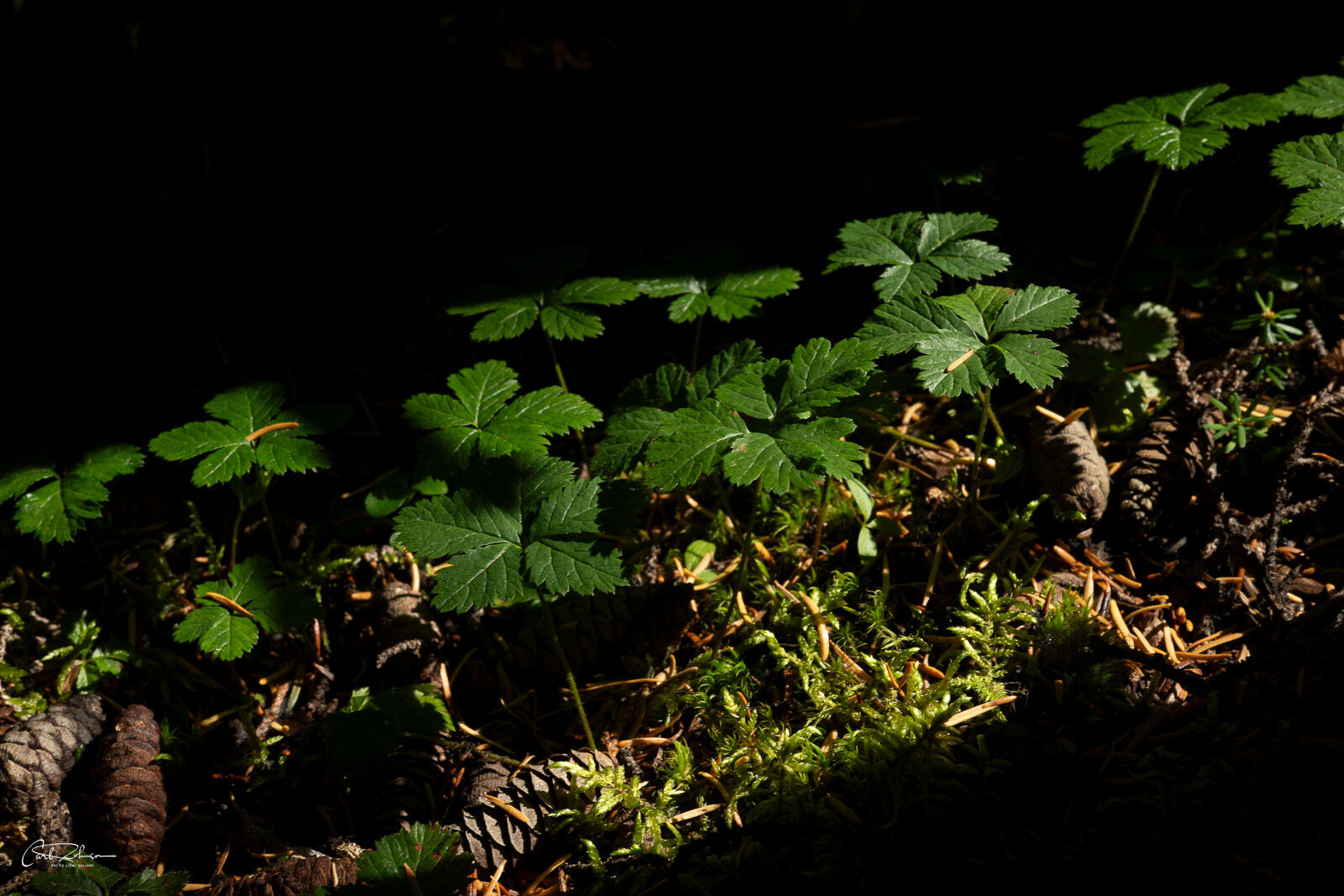
Sideways light sets a patch of Nagoon Berries aglow in the undergrowth along the Hemlock Knob Trail.
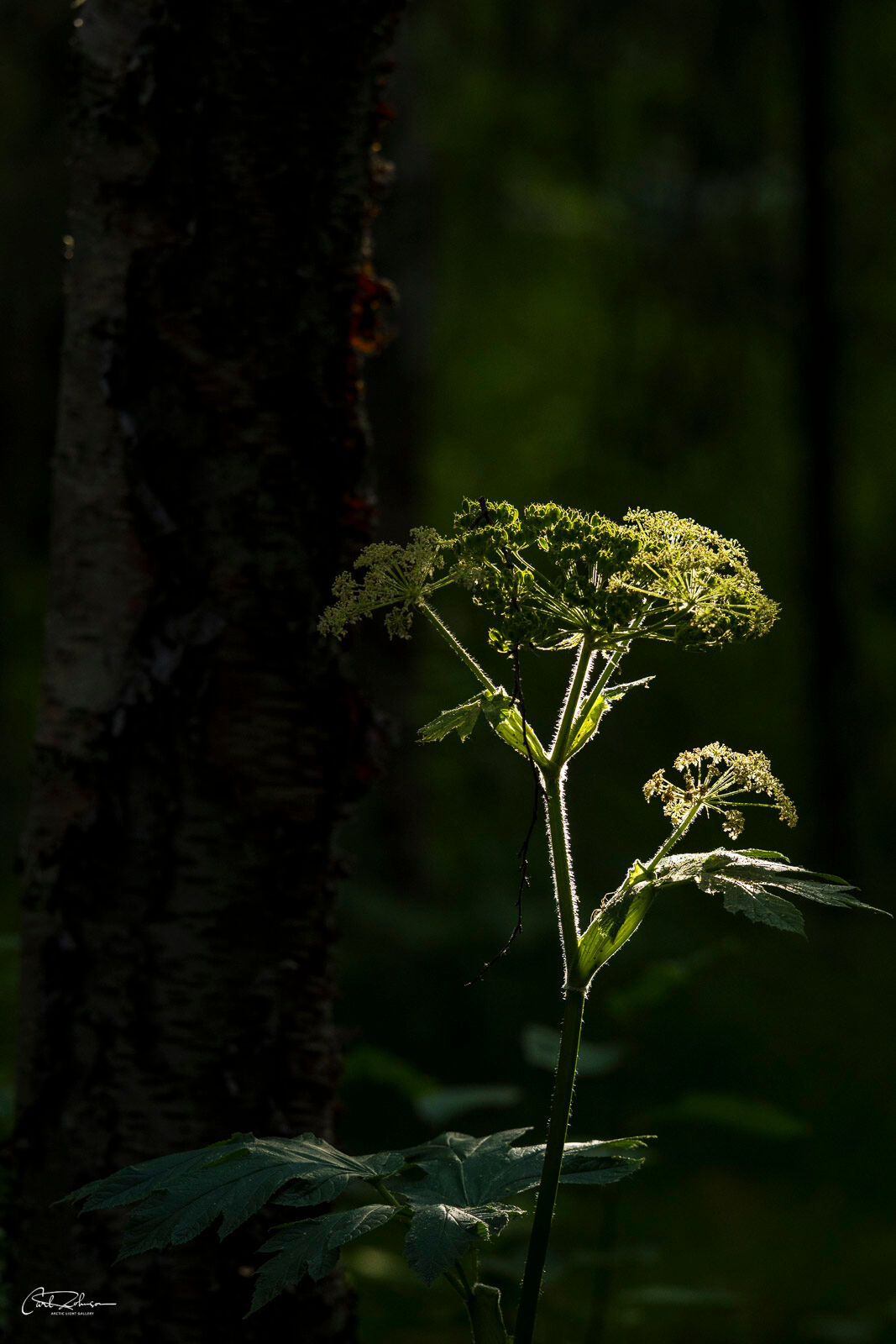
A lone plant of cow parsnip catches afternoon light in the woods along the trail.
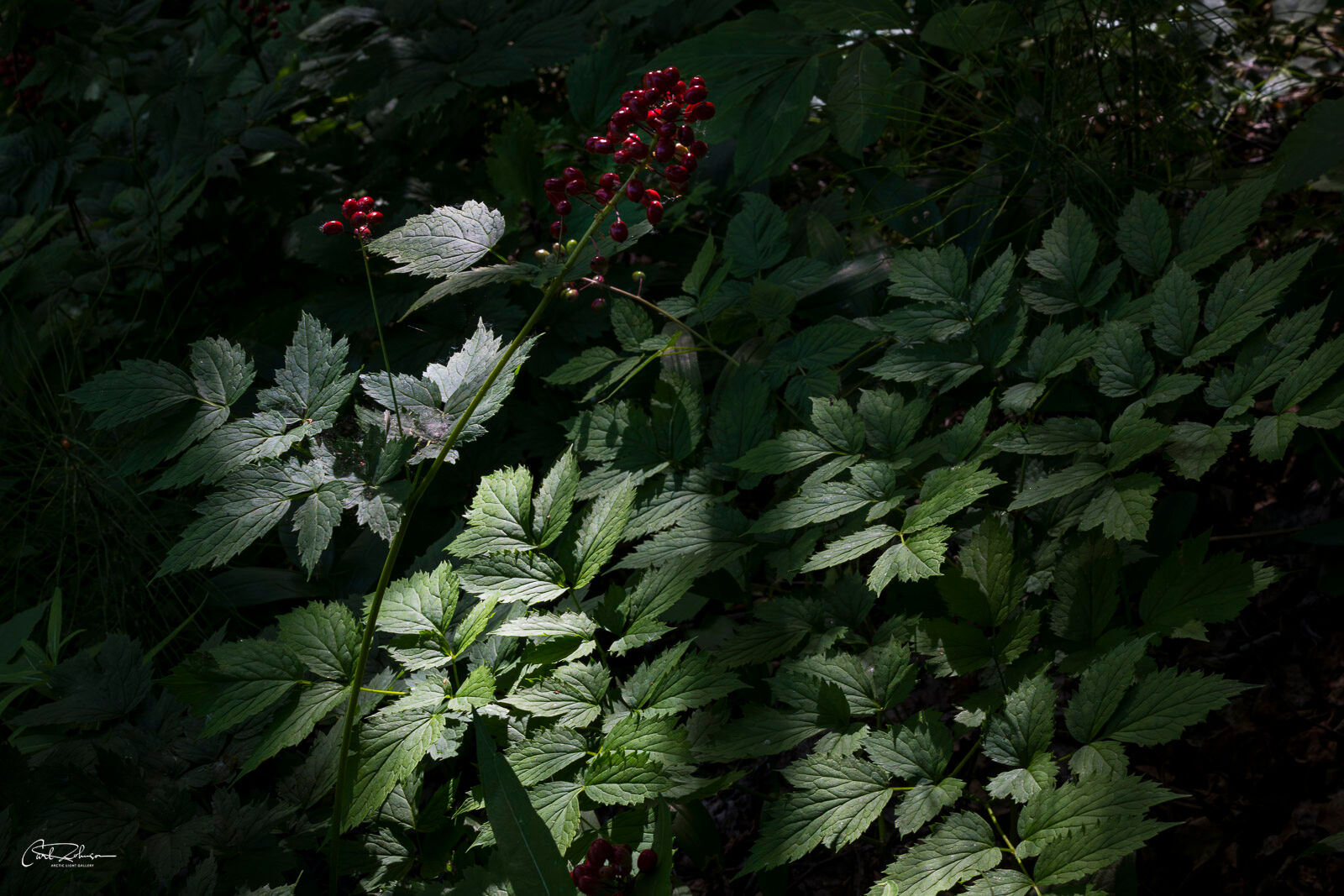
Sunlight cuts through the shadows to light up a patch of red Bane Berries.
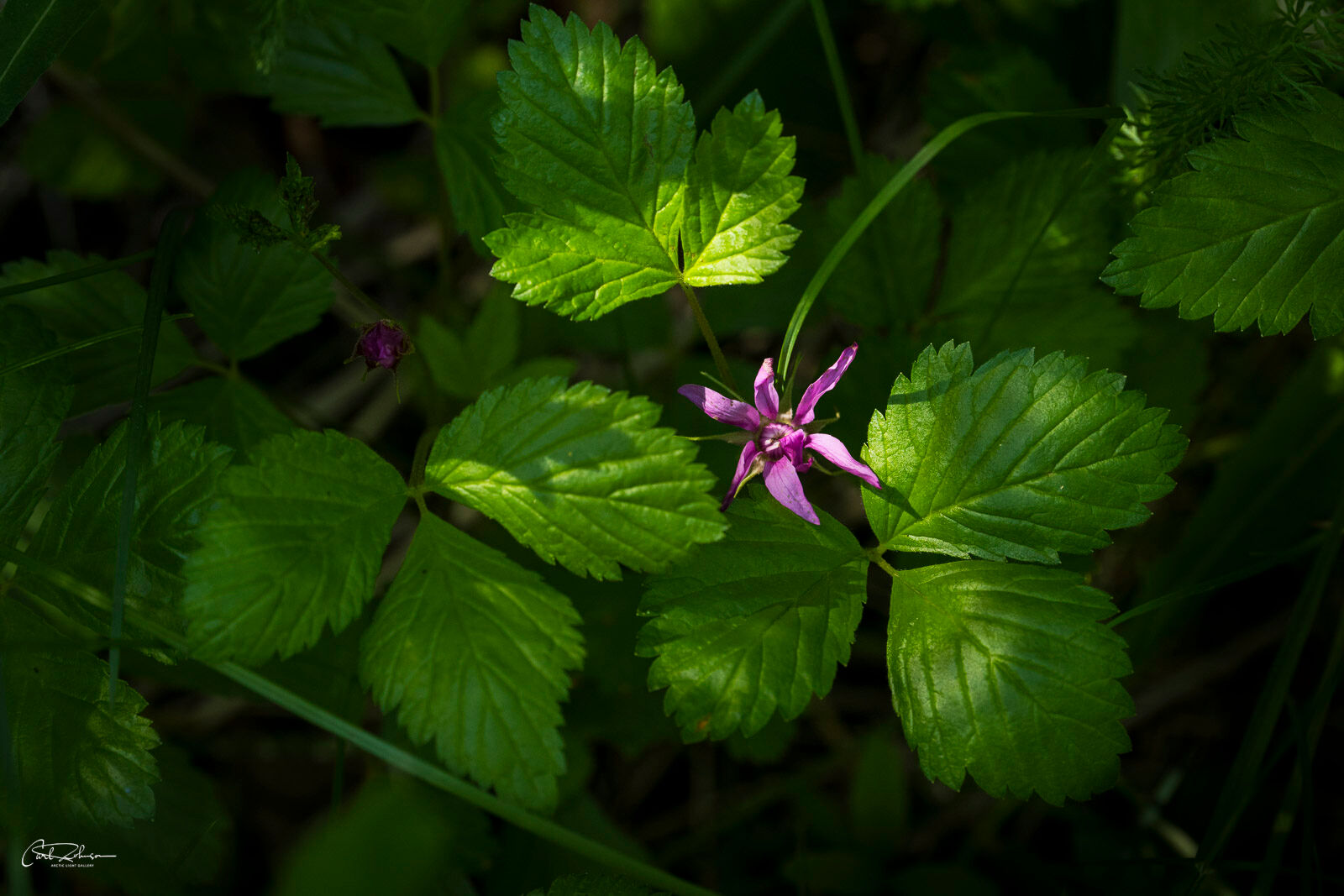
Scattered light brushes across the bloom and plants of a Cloud Berry.
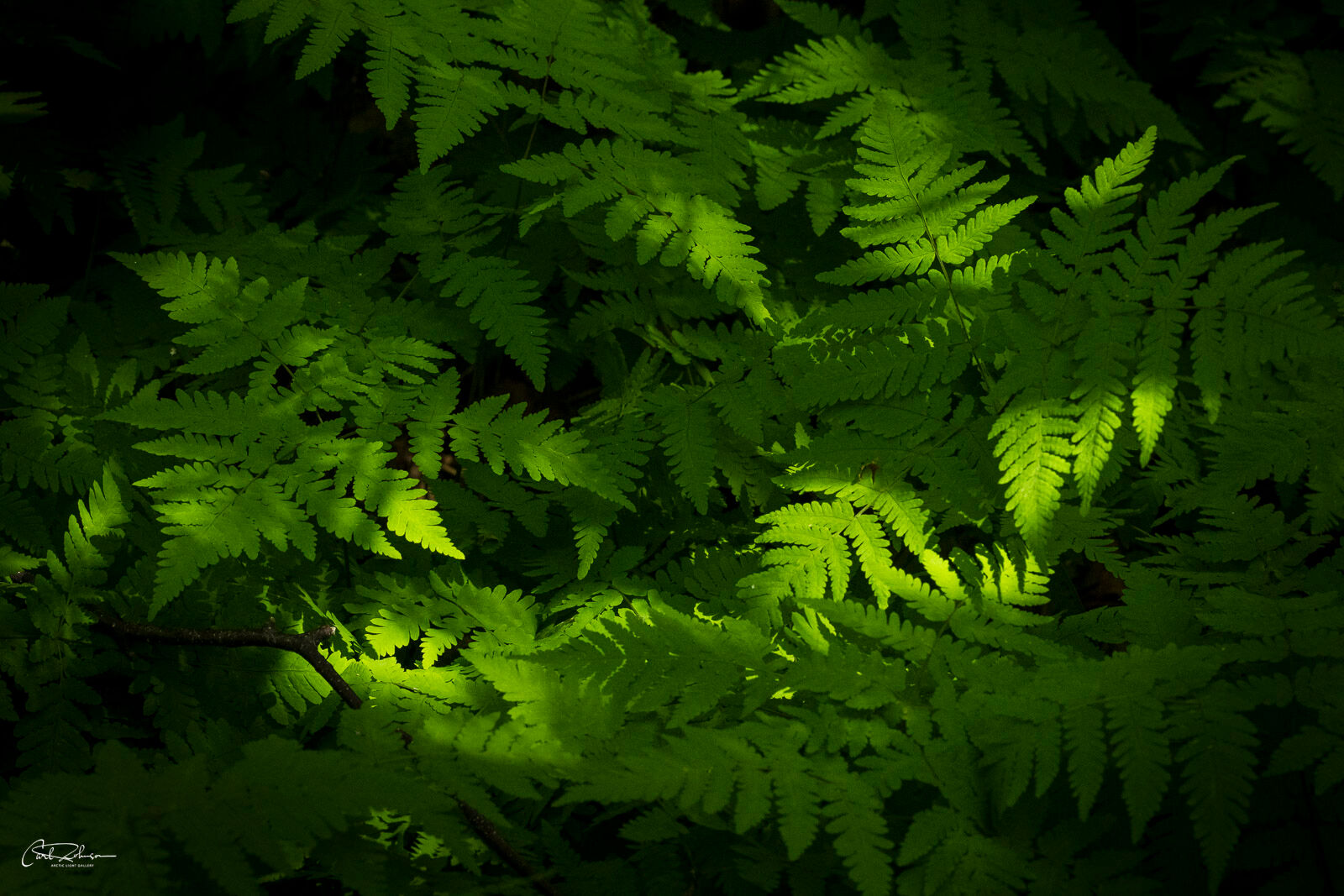
Scattered sunlight warms up fern fronds near the trail.

Leaves resembling fingers of the Monkshood plant seem to reach out from the shadows for sunlight.
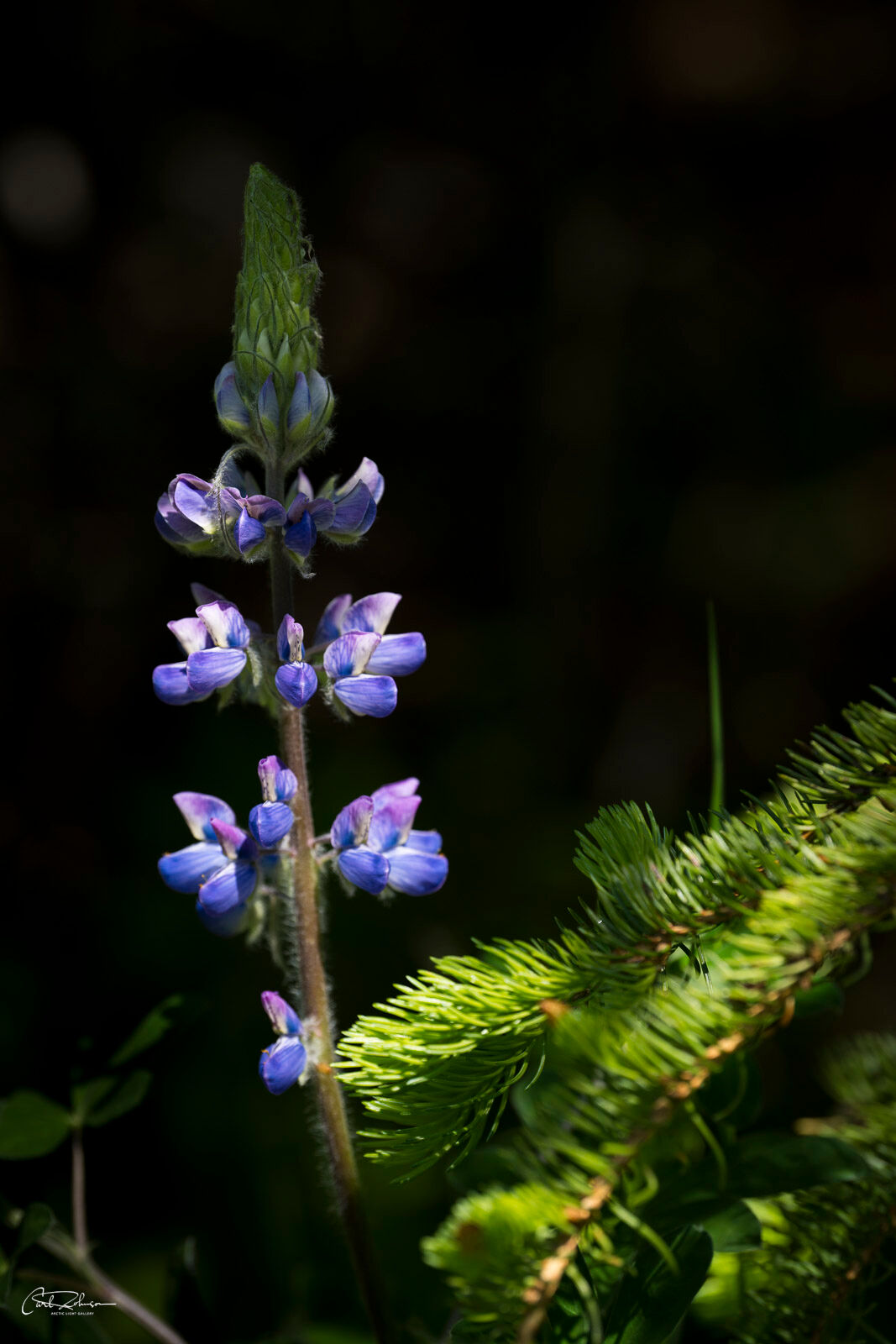
Early bloom of a Nootka Lupine shares the sunlight with a white spruce.
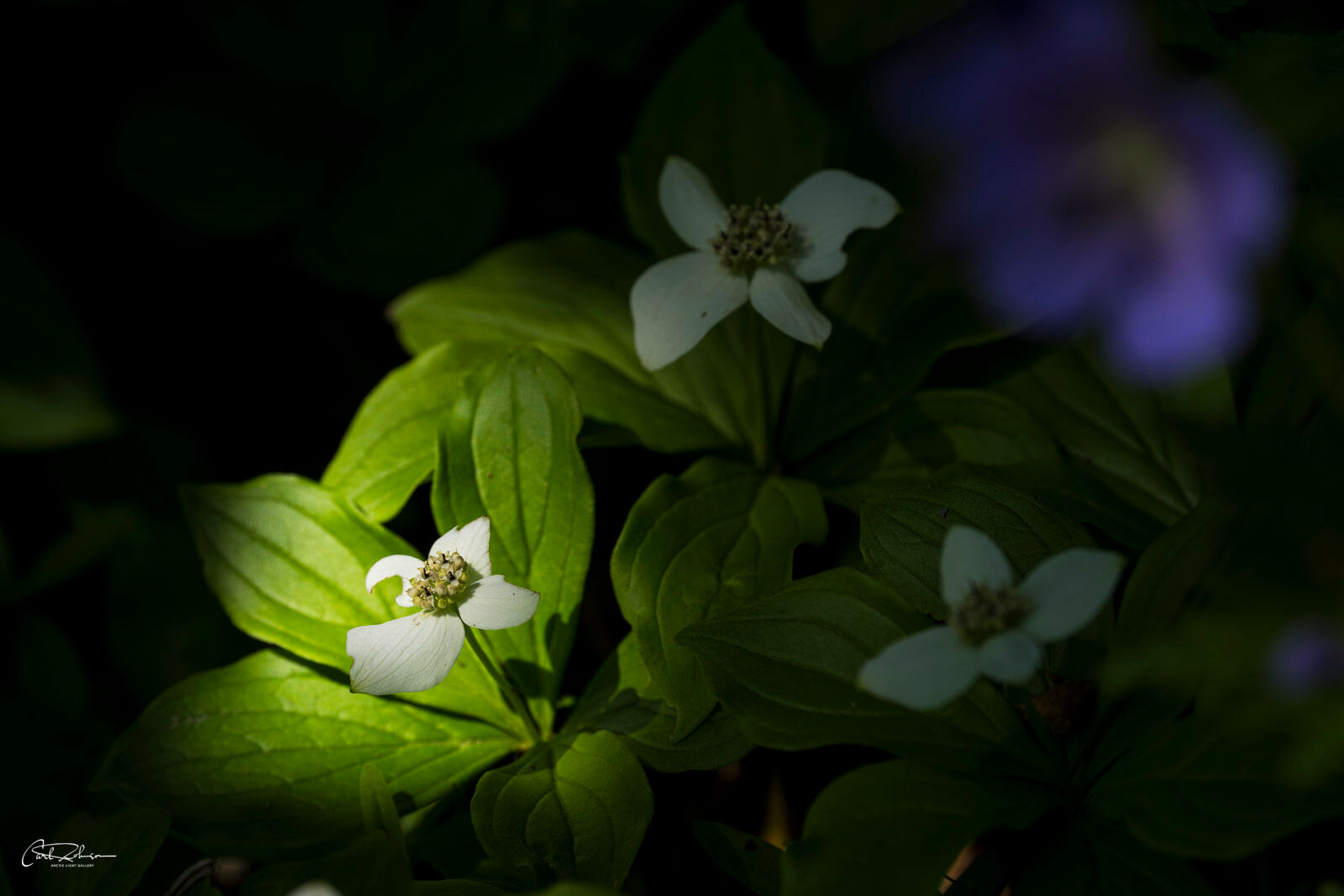
A single portion of a cluster of Dwarf Dogwood hogs the sunlight while other blooms linger in the shadows.
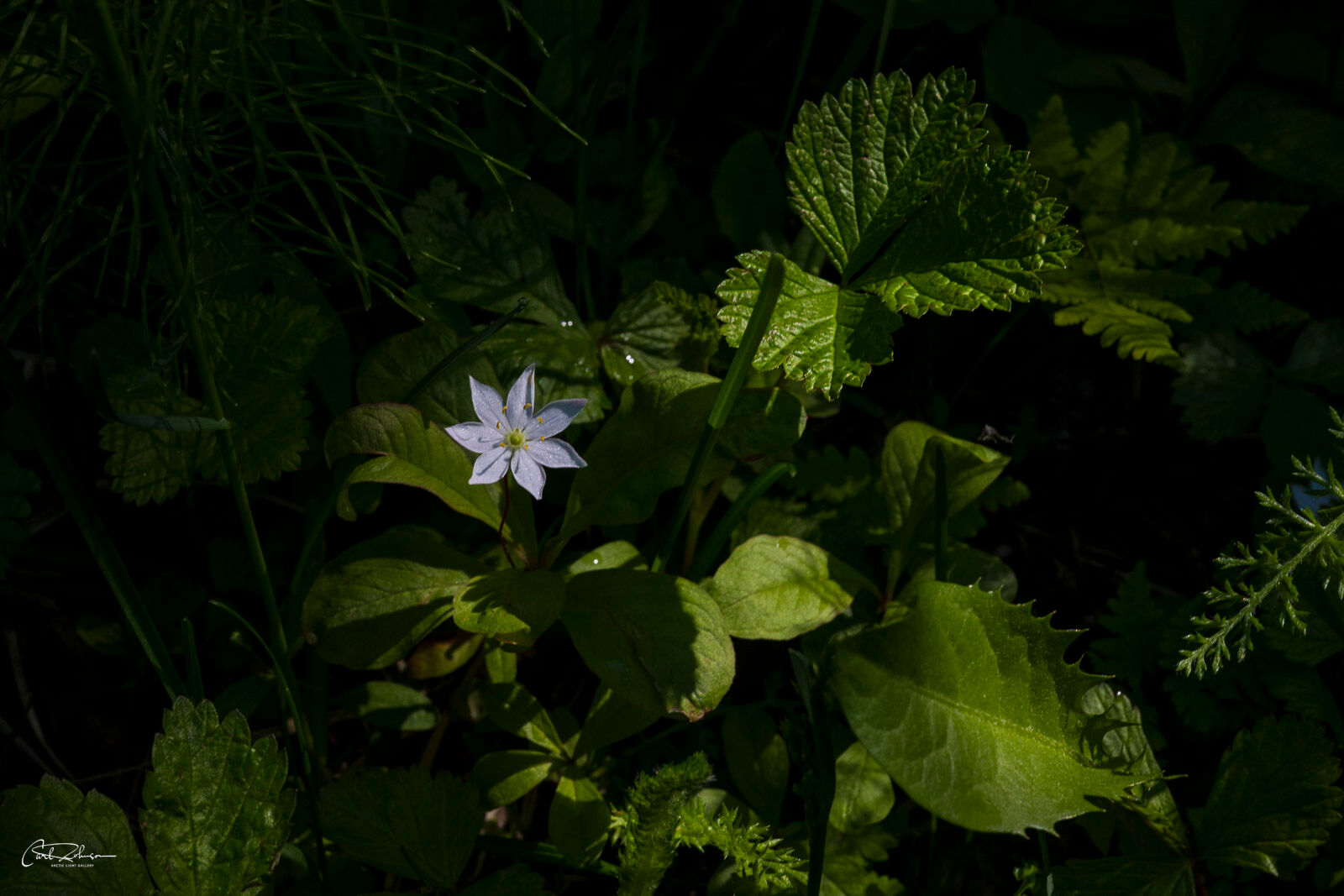
A lone Starflower emerges from the shadows to enjoy a shaft of morning sunlight.
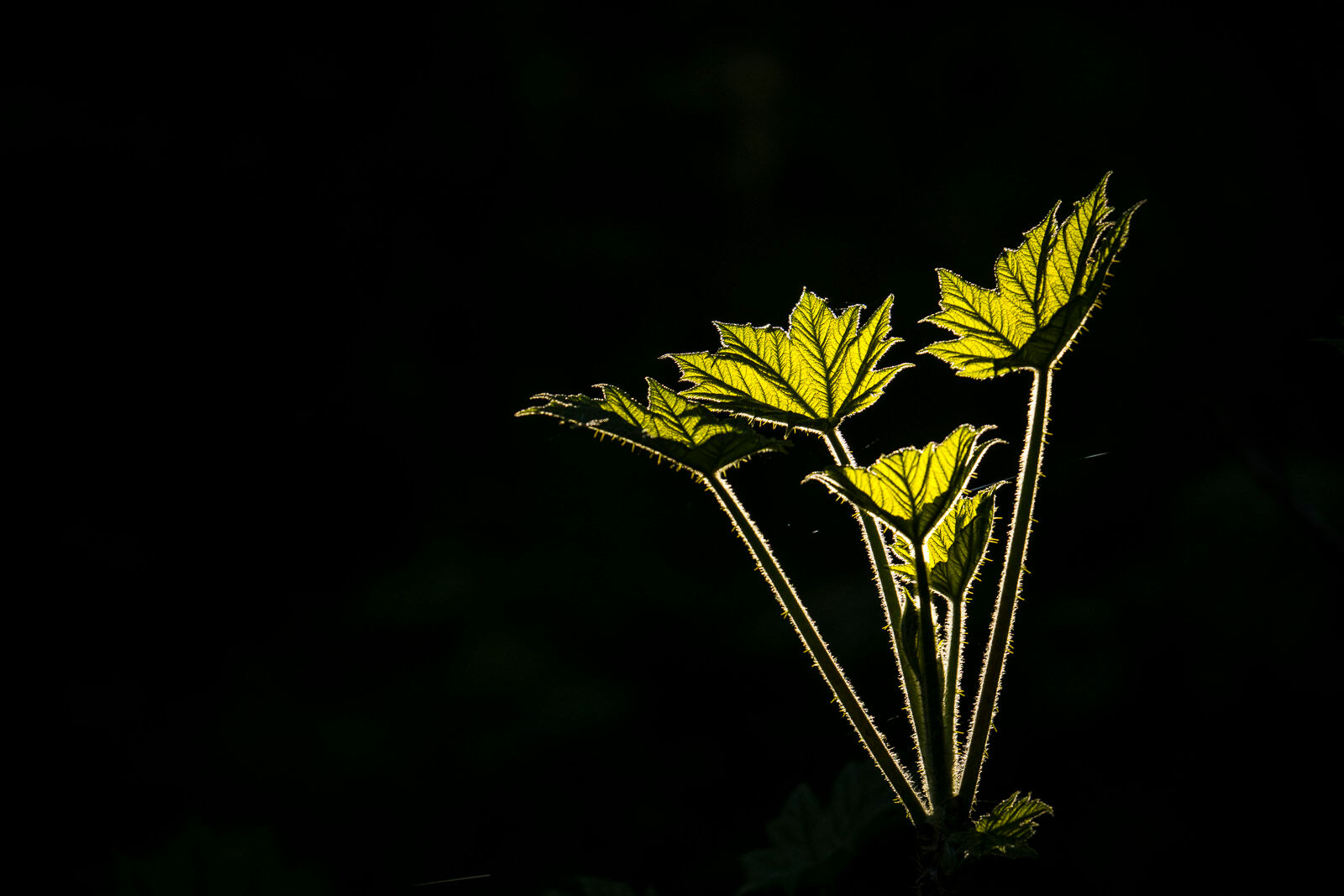
A patch of Devil's Club catches morning light in late May.