
Artist's Statement
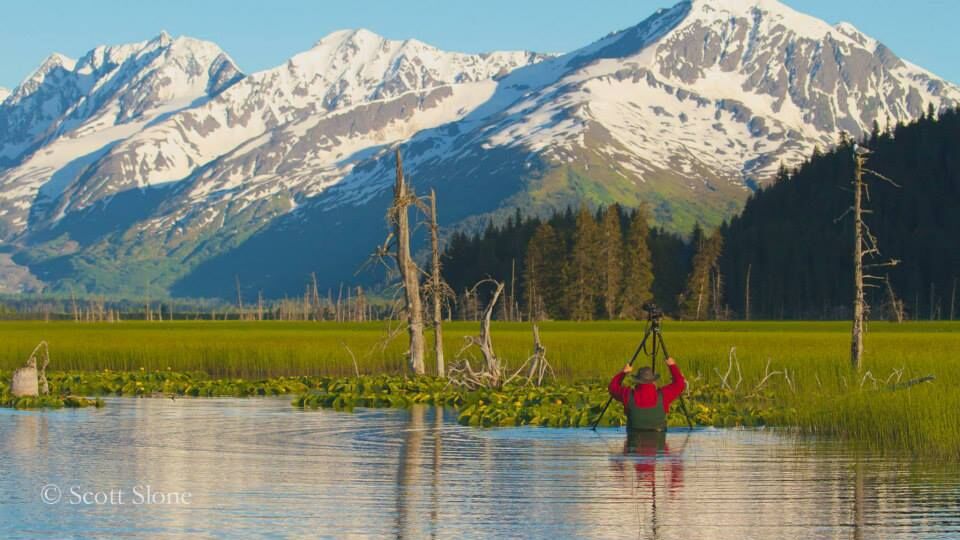
I am a photographer. In an era when many image-makers are described as “digital content creators,” I still understand my work in the older, more precise sense of the word. To me, a “digital content creator” includes composites, illustration, and AI-generated imagery that move beyond photography. My own practice remains rooted in the act of seeing, waiting, and composing an image before taking a photograph. The tools have changed since I first picked up a Kodak Instamatic X-15 at age thirteen, but the essential process has not: I use the camera to create an image that is faithful to what I experienced. That commitment is not about purity for its own sake; it is about the satisfaction of responding directly to the world. Through photography, I explore nature in all the forms it offers—from frost crystals and tundra plants to wildlife and vast landscapes. Living in Alaska has also sharpened my attention to the relationship between people and nature, and to how closely people and the environment are intertwined.
When I was young, I carried that X-15 through the Black Hills of South Dakota to document my daily adventures. Over time, my photographs shifted from documentation to understanding. Today, photography is the way I make my deepest connection to the world. I still value the simple experience of hiking or biking through a landscape, being fully present to its peace, surprise, and wonder. Photography deepens that experience. It slows me down, sharpens my attention, and teaches me to notice what I might otherwise pass by. Through the camera, I do not simply look more closely: I learn to see.
My process is simple and rooted in discovery. Unless I am traveling for a very specific subject—such as going to Kaktovik, Alaska, to photograph polar bears—I do little advance planning beyond learning a place’s basic features. Once I arrive, I explore. I give myself time. If a trail guide says a hike takes three hours, I allow eight. That extra time makes room for surprise. When I find a subject that holds my attention, I study it from multiple perspectives and keep photographing until the image feels complete. Over the years, my strongest photographs have come from this method of exploration, discovery, and creation. I am not trying to make images for a market; I am trying to make images that feel earned and true.
Repeatedly, I return to the ephemeral. The photographs I connect with most are built around fleeting moments—moments that carry a story and reveal the natural world in transition. They might be a flock of sandhill cranes crossing the summit of Denali or a salmon carcass suspended for an instant in tidal mud. These are brief events, easily missed, yet they speak to the constant motion of the world around us. When I encounter such a moment, it feels like both discovery and gift: a recognition that time, patience, and attention have been rewarded. Making an image in that instant produces an emotional intensity that fixes the experience in my memory.
My primary objective is to connect with nature through photography and make images that deeply satisfy me. At the same time, I hope the work invites others into a sense of wonder about the natural world and our place within it, especially through subjects that may at first seem atypical or ordinary. I am often drawn to what others overlook, because in those subjects I find the extraordinary. One of the most meaningful responses I have received came from a resident of Anaktuvuk Pass in the northern Brooks Range. After I photographed the village at sunrise—its tundra, mountains, and first light—and shared the image on social media, someone from the village commented, “I didn’t know our village was so pretty.” That response affirmed what I hope photography can do: reveal beauty that is already there but not always seen. I want my images to encourage people to explore more deeply, look more carefully, and encounter the world anew.